
Achaea, Dreams of Divine Lands
Set in a vibrant, high fantasy environment, Achaea’s world is one of magic and mystery – a sprawling realm where the players shape the narrative and the Gods Themselves often choose to place their hand on the scale. It is a realm of conflict and struggle, of mighty sorcerers, cunning merchants, and fierce rivalries, where the heroes don’t always emerge victorious
Play for free: No download required. Create your character at play.achaea.com and start in minutes.
What is Achaea?
Achaea is a text-based multiplayer RPG in the MUD tradition, set in the original world of Sapience. Unlike most modern online games, Achaea has no graphics. The entire world is rendered through descriptive prose, and players interact with it through text commands. What makes this more than a curiosity is the depth underneath that interface: a persistent world where player decisions accumulate into a shared history that now stretches across nearly three decades.
The genre label is MUD, short for Multi-User Dungeon, but Achaea operates at a scale and complexity that sits well past what that label typically implies. The game has a functioning economy, a legal system, genuine political structures with elected and appointed offices, a pantheon of Gods played by the staff who intervene in the world, and a combat engine that rewards years of deliberate study.
If you are new to text RPGs, the MUD games overview on this site is a good place to start. If you already know what a MUD is and you want to understand what puts Achaea near the top of the genre, read on.
A world built on nearly 30 years of history
Achaea launched in 1997. That matters for a reason that is easy to understate: everything that has happened in the game since then is still part of the world. Player-created organizations, wars between cities, the rise and fall of Gods, major political coups inside guild structures. None of it was reset. It accumulated.
This creates a very different dynamic from most online games, where the world resets periodically or where the story is delivered through cutscenes and static quest text. In Achaea, the history you read about in lore documents was made by players. The organizations you are considering joining have founding stories, internal politics, and rivalries that developed organically over years.
New players engage with this history from day one. You will hear references to events you were not present for. You will encounter veterans who lived through them. That continuity is part of what makes Achaea feel like a place rather than just a game.
Key milestones at a glance
| Years | Key milestones |
|---|---|
| 1997–1999 | Achaea launches. Initial classes: Serpent, Monk, Druid, Sentinel, Occultist, Infernal, Paladin, Priest, Magi. Cities of Ashtan, Hashan, and Shallam. Tattoo system, alignment system, forging, and war system introduced. |
| 2000–2001 | Dragon class unlocked. Shaman class released. City of Cyrene founded. Runewarden guild opens. Satyrs and Sirens added as races. First mortal-to-god ascension (Maran becomes Pentharian). Multiple gods return: Aurora, Valnurana, Gaia. Wilderness map system and underwater Riparium discovered. |
| 2002–2003 | Sartan raises Mount Mhaldor as a new city-state. Gaia sacrifices herself. Eleusis established. Apostate and Sylvan guilds founded. Bard class released. The Underworld discovered. Pandora, Goddess of Mischief born from the merger of Aegis and Eris. |
| 2004–2005 | Guilds replaced by Houses — classes decoupled from guild membership. Maya becomes the Great Mother after Sarapis steps down. Vertani invasion arc plays out and concludes. Makali, Miramar, and Keresis born as new goddesses. Arcadia discovered. |
| 2006–2007 | Eternal Night storyline plunges Sapience into darkness. Artemis born. Ships launch — player seafaring begins. The Child of the Sun storyline. Multiple new areas discovered. |
| 2008–2009 | Seafaring fully rolls out with ship combat. Year 500 celebrations. Lothos underwater kingdom discovered. Organisation alliance system launched. |
| 2010–2011 | Blademaster class released. Alchemist class released. Dragon class gains Lairs. Ship trading system launched. |
| 2012–2013 | The Bal’met crisis — most catastrophic event in Achaea’s history. Multiple gods slain including Selene and Agatheis. The Fall of Shallam — the city is destroyed and collapses into the sea. Maya sacrifices her divinity. Targossas founded as the new Good-aligned city. |
| 2014–2016 | Tradeskill split. Multiclass system launched. Battlerage and bashing overhaul. House Renaissance completes. Depthswalker class released. |
| 2017–2019 | Forays released. Elemental Planes and Elemental Lord class launched. Psion class released with the lost city of Nur. Zeal skill added for Priests. Tsol’teth invasion — Cyrene falls. Babel and Neraeos return after centuries. |
| 2020–2023 | City war system overhauled. Pariah class released (20th class). Eidolic Influence territorial conquest system launched. The Age of Black Woe — Pazuzu rises and falls. The Karthic invasion strikes all six cities. |
| 2024–2026 | Year 1000 AF reached in-game. Haskor ascends to godhood. Sapling of Gaia destroyed. |
21 classes across every playstyle
Achaea has 21 playable classes. Each one has a full skill set usable in both player-versus-player combat and against the world’s enemies (PvE). Classes are not interchangeable variations on a single combat loop. They have genuinely distinct mechanics: different offensive and defensive tools, different win conditions in PvP, different strengths against different types of enemies.
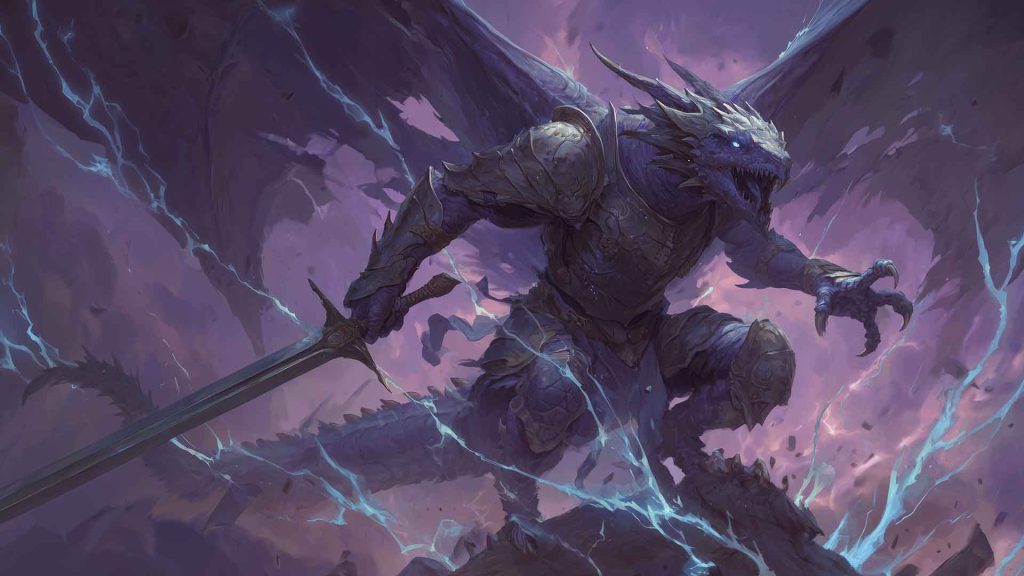
Some classes take direct inspiration from classic fantasy archetypes. Knights use mounted combat and weapon skills developed through a long tradition inside the game. Mages work with elemental magic. Others are substantially more unusual: Depthswalkers manipulate time and spatial positioning, which creates a combat toolkit unlike anything in most other RPGs. Pariahs spread disease-based effects that accumulate over a fight in ways that require opponents to manage actively.
Because the class system is deep and the differences between classes are real, choosing your first class is a decision worth thinking about. Iron Realms maintains a full class breakdown on the Achaea site:
- Explore all 21 Achaea classes on achaea.com
- View races and their class affinities on achaea.com
The skill system uses a lesson-based progression model. Characters earn lessons through levelling and can also purchase additional lesson packages. As of March 2026, both Achaea and Aetolia award significantly more lessons during normal levelling, specifically 2,000 additional lessons by level 80, which means new players can reach full class skill investment through play rather than heavy spending.
Cities, houses, and player-run politics
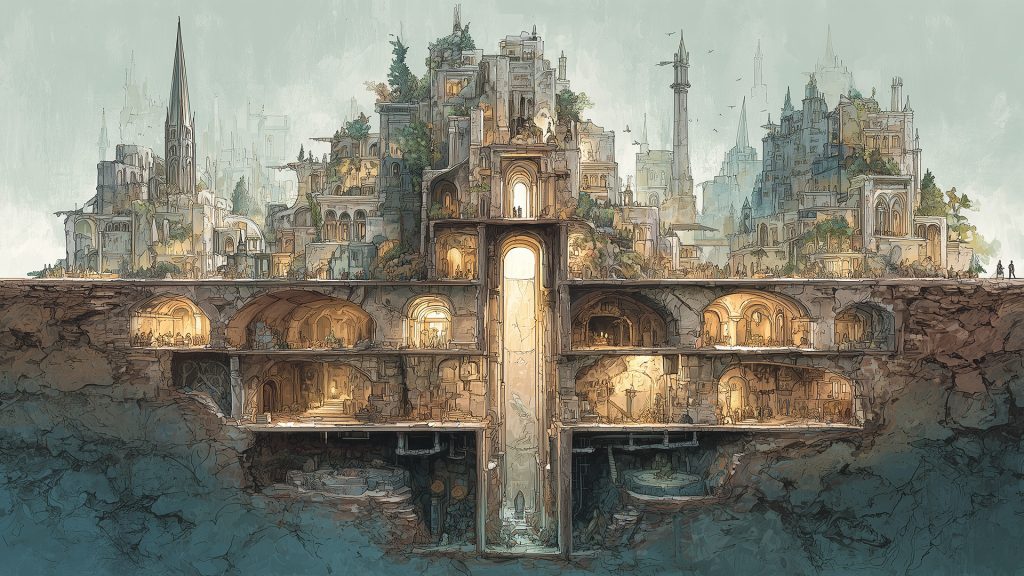
Achaea has six city-states, each with a distinct culture, political alignment, and set of allied organisations. City governments are almost entirely player-run. The positions of Ruling Council, city secretaries, ministry roles, and other offices are held by players who were elected or appointed by other players. Staff does not manage day-to-day governance.
Houses are smaller organisations within cities, roughly comparable to guilds in other games, but with internal hierarchies, membership requirements, and their own political standing within the city. Getting involved with a house is one of the main ways players become part of the social fabric of the game.
The interaction between city-states creates ongoing conflict. Cities have different relationships with each other: some are traditional enemies, some have current treaties, some have complicated histories that flare into active rivalry depending on who holds key offices. Because leadership rotates through actual player decisions, the political landscape shifts.
| City-State | Alignment | Character |
| Ashtan | Chaotic / Shadow | Oldest city, historically opposed to order-aligned states |
| Cyrene | Neutral / Community | Merchant focus, historically resistant to political entanglement |
| Eleusis | Nature / Balance | Tied closely to natural forces and the Elemental Planes |
| Hashan | Darkness / Moon | Scholarly tradition, strong ties to occult and cosmic themes |
| Mhaldor | Evil / Order | Theocracy under Sartan, the Malevolent; strictly structured |
| Targossas | Good / Order | Founded through player-driven holy war; tied to Good Gods |
Combat, questing, and crafting
Thrilling PvP combat
Achaea’s player-versus-player combat has a long reputation for complexity. Each class brings a distinct set of offensive mechanics and the goal in most fights is to apply a specific combination of conditions or reach a threshold that triggers a kill. Because different classes have different win conditions, playing effectively against an unfamiliar opponent requires knowing their toolkit, not just executing your own.
Combat happens at individual scale (duels), small group scale, and large-scale city-versus-city conflicts involving coordinated group tactics. The PvP scene has produced players who have spent years refining specific class setups, and the community maintains detailed external resources on mechanics and strategy.
PvE and exploration
PvE in Achaea runs from solo hunting in the world’s many areas to group dungeon content called forays. Forays are instanced encounters against difficult enemies and boss-tier foes, designed for coordinated groups. Beyond forays, the game world contains hundreds of areas with their own enemy populations, environmental details, and embedded quest lines.
The quest system is notably large. Most areas in the game have quests attached to them, ranging from short tasks to extended story chains. Achaea’s quest writing is generally embedded in the world’s fiction, meaning quests feel like part of the world rather than content sitting on top of it.
Questing
Reunite lost lovers. Commit regicide. Organize rebellions. Or simply help an old lady feed her family. Achaea’s quest system is vast, intricate, and all-encompassing with hundreds of quests to discover and complete. Almost every area in the sprawling game world has something for you to do or someone in need of help. And whether you are the hero of the people or a villainous meddler is entirely up to you…
Crafting tradeskills
Tradeskills let players produce goods sold to other players or used to furnish personal spaces. The range is wide: cooking, tailoring, jewellery-making, furniture carpentry, tattooing, and artistry (paintings and murals that can decorate estates and public spaces). Players with high skill levels in a tradeskill can take on commissions from other players and build a reputation within the economy.
Seafaring and exploration
Seafaring offers unparalleled opportunities for adventure. Commission your own ship or join another player’s crew and the oceans are your oyster! Sail to far flung islands. Relive the grand days of piracy on quest-driven voyages. Battle mighty seamonsters, or become a pirate and shoot down other ships!
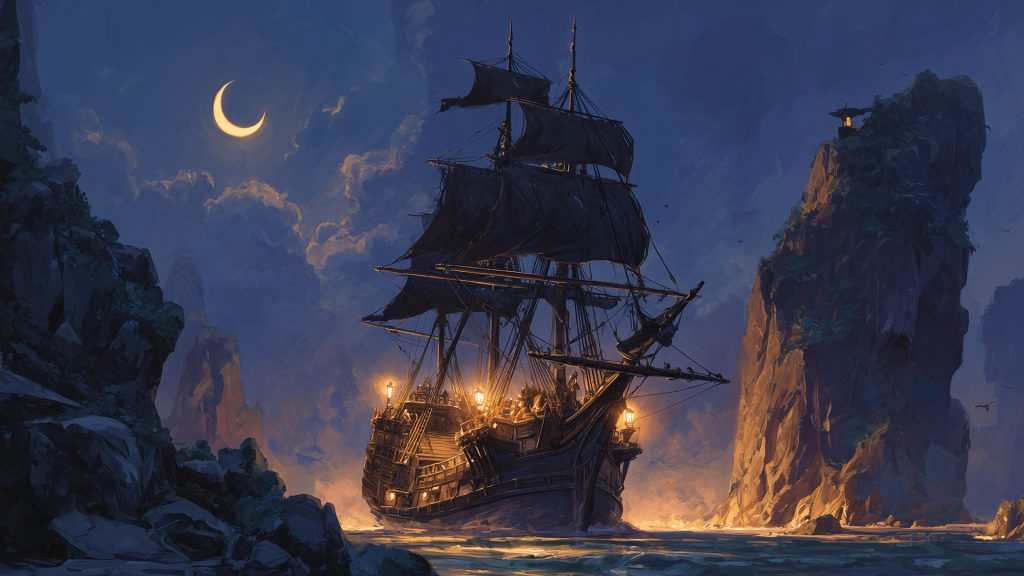
Players can commission their own ship or join another player’s crew. The ocean connects to island areas not reachable by land, making seafaring a genuine exploration mechanism rather than just a transit option.
Ship-to-ship combat is available and competitive. Players can engage in piracy, hunt sea monsters, and take on quest chains tied to specific maritime locations. For players who want an adventure frame that sits outside the city politics and class competition of land-based play, the sea provides a reasonably self-contained activity loop.
Gods, Divine orders, and the pantheon
Achaea is a world where the Gods are very real: and very interested in the goings on of mortal kind. Devotees may earn the attention of one such God and join their divine order, become a representative, champion, and spokesperson on the world stage. And of course, other Gods may oppose yours…
The Gods of Achaea are played by Iron Realms staff members, meaning they actively participate in the world rather than existing only as lore entries. A God may communicate directly with players, organize events, issue divine quests, or intervene in major world conflicts.
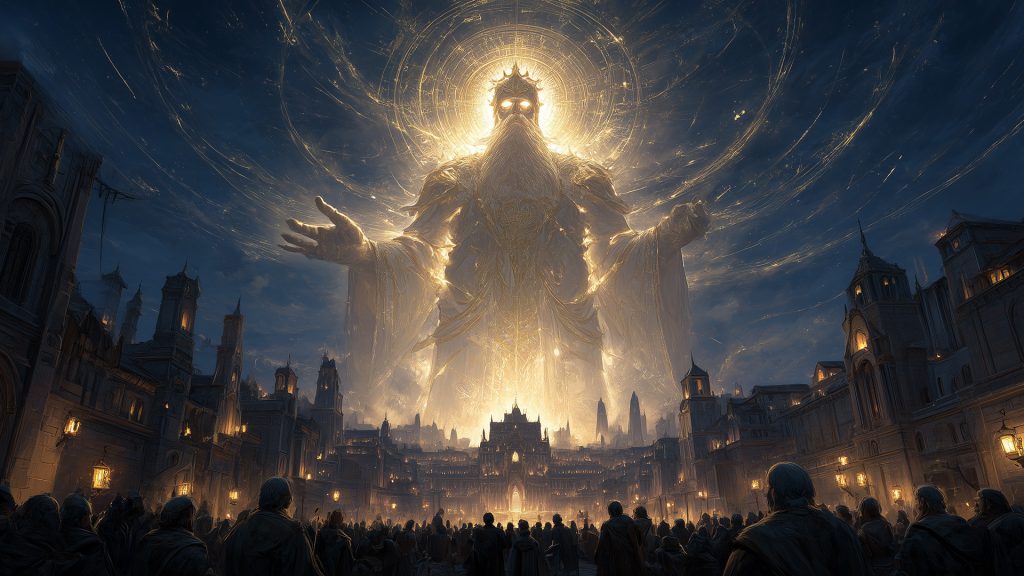
Players can join a Divine order by earning the attention of a specific God and receiving an invitation. Order members take on roles as representatives and champions of their deity, which connects them to the God’s conflicts and alliances with other deities. Because Gods are active, the dynamics of the pantheon shift over time. A God who is politically ascendant one year may face opposition the next.
The Divine system is one of the features most specific to Achaea within the Iron Realms catalogue. It adds a layer of unpredictability to the world because the Gods are not scripted to behave consistently. They have personalities, preferences, and grudges, and their movements may influence the game world at large.
Free to play, with no pay-to-win mechanics
Creating an account and playing Achaea is completely free. The game has a credit system used for optional purchases such as cosmetic items, lesson packages for faster skill progression, and some character conveniences. Players cannot buy combat power directly. The strongest characters in Achaean PvP are strong because of class knowledge and years of practice, not credit spending.
The credit economy also has a player-to-player exchange mechanism. Players can earn gold in the game and convert it to credits through the in-game market, meaning a player who does not want to spend real money can still access premium content through sustained gameplay.
For players evaluating Iron Realms games on their monetization model, Achaea sits at the more player-friendly end of the spectrum. The core game, including all class skills, is accessible through normal progression. New lesson rewards added in 2026 make it easier to reach full class investment through play without large purchases.
Play free: No download required. Play in your browser at play.achaea.com.
Compare all Iron Realms games: ironrealms.com/compare-games/
Frequently asked questions
Is Achaea free to play?
Yes. Creating an account and playing Achaea is free. The credit system allows optional purchases for cosmetics, lesson packages, and character conveniences, but the core game including all class content is accessible without spending.
Do I need to download anything to play Achaea?
No. Achaea runs in any modern web browser through the client at play.achaea.com. There is no client download required, though some players prefer to use third-party MUD clients for additional configuration options.
How many classes does Achaea have?
Achaea currently has 21 playable classes. Each class has a distinct skill set and combat approach. A full breakdown is available on the Achaea website at achaea.com/classes.
Is Achaea still active in 2026?
Yes. Achaea has an active player community and dedicated, paid staff working on content updates, class balance work, and new features. The game launched in 1997 and has maintained continuous operation since.
What kind of game is Achaea?
Achaea is a text-based multiplayer RPG, also called a MUD (Multi-User Dungeon). It has no graphics. Gameplay involves reading descriptive prose and interacting through text commands. The genre is older than graphical MMORPGs, and Achaea is one of the most complex and long-running examples of it.
How does Achaea compare to other Iron Realms games?
Achaea is the oldest and most established Iron Realms game. It has the largest body of accumulated lore and the most developed political structures. Aetolia is the closest comparison, sharing a similar engine with a darker tone. See the full comparison at ironrealms.com/compare-games.
Can I play Achaea if I have never played a text RPG before?
Yes. Achaea has a new player introduction sequence designed for players unfamiliar with the genre. The learning curve is real and the game is complex, but new players are welcomed by the community and many long-time players actively mentor newcomers.