
Imperian, Sundered Heavens
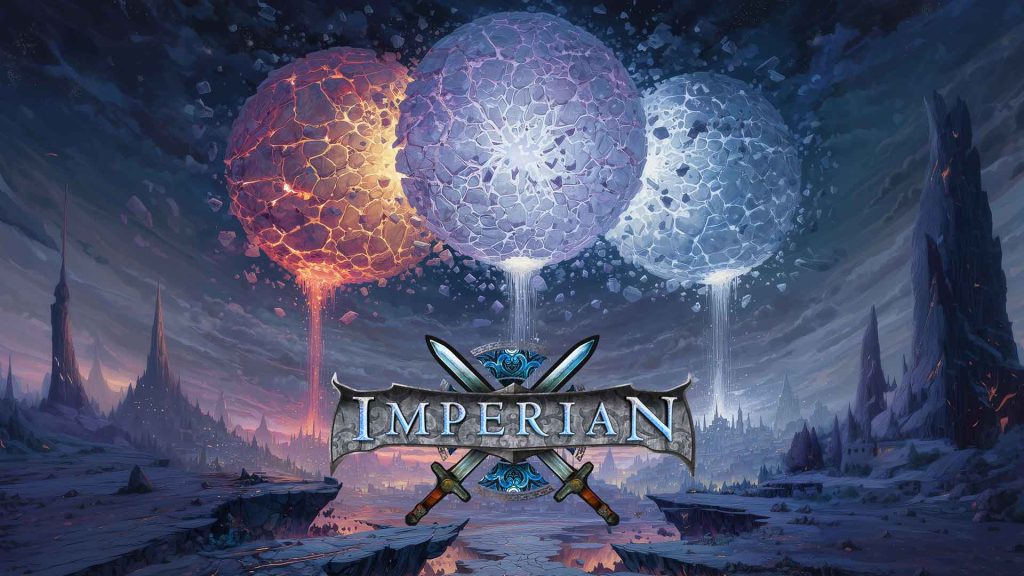
Imperian is a PvP-focused fantasy text RPG from Iron Realms Entertainment, now operating in legacy mode. The game world remains fully accessible and free to play, but no longer receives active content updates. Players looking to start fresh in an actively developed Iron Realms game can transfer to Achaea, Aetolia, or Lusternia.
Legacy Mode Imperian is in legacy mode: no longer commercially developed, but volunteers are making improvements.
The world is fully accessible and free to play. Character retirement transfers are available to Achaea, Aetolia, or Lusternia.
>> Play Imperian: https://play.imperian.com
What is Imperian?
Imperian is a text-based multiplayer RPG in the MUD tradition. Like other Iron Realms games, it has no graphics. Players interact through text commands and move through a world built from descriptive prose. What distinguished Imperian within the Iron Realms catalogue was its emphasis on PvP combat above most other activities. The game was designed around conflict between players as the primary driver of the experience.
The world is built on a three-power structure. When the Breaking of the Moon unleashed magick upon the world, it created three distinct forces that divided the population along ideological and factional lines. The Material realm where mortals live sits alongside a Demonic realm and a Spiritual realm, each mirroring the other, and the conflict between the forces of light and darkness runs through everything: city politics, class choice, PvP allegiance, and religious affiliation.
Imperian launched as a commercial Iron Realms game and ran actively for many years before transitioning to legacy mode. During its active period it developed a dedicated player community, particularly among players who valued hard-edged PvP with real consequences and a world that rewarded meritocracy.
Legacy mode: what it means in practice
Legacy mode means Imperian is no longer commercially staffed by Iron Realms. It will not get new content or regular staff support in the way it did as an active commercial product. That is a significant change, and it is worth being clear about for anyone considering investing serious time there.
What legacy mode does not mean is that the game is frozen or abandoned. Volunteer contributors have continued to make improvements to Imperian, putting it in a similar position to Lusternia and Starmourn rather than being a completely static codebase. The world remains fully operational, and players can log in, explore, fight, and engage with the game’s systems. The community that remains is small but real, and for players with existing characters and long attachments to the world, that continuity matters.
Iron Realms made character retirement transfers available when the legacy announcement was made. Existing Imperian characters can transfer to Achaea, Aetolia, or Lusternia, preserving some of the investment players built up over years of play rather than requiring them to start from zero in a new game.
| What legacy mode means | What legacy mode does not mean |
| No new content or features | The game world is closed or inaccessible |
| No regular commercial staff support | Existing characters are deleted or lost |
| Smaller active population | All community is gone |
| No Iron Realms development roadmap | Current systems are broken or unplayable |
| Volunteer improvements ongoing | The game is completely static |
| Character transfers available | Players must abandon investment entirely |
A world built on three powers and two realms
Imperian’s setting is a fantasy world structured around a fundamental cosmological split. The Breaking of the Moon created three distinct power structures, each with its own philosophy, pantheon of entities, and aligned city-state. Players chose one of these powers and their character’s faction identity followed from that choice through most of what they did in the game.
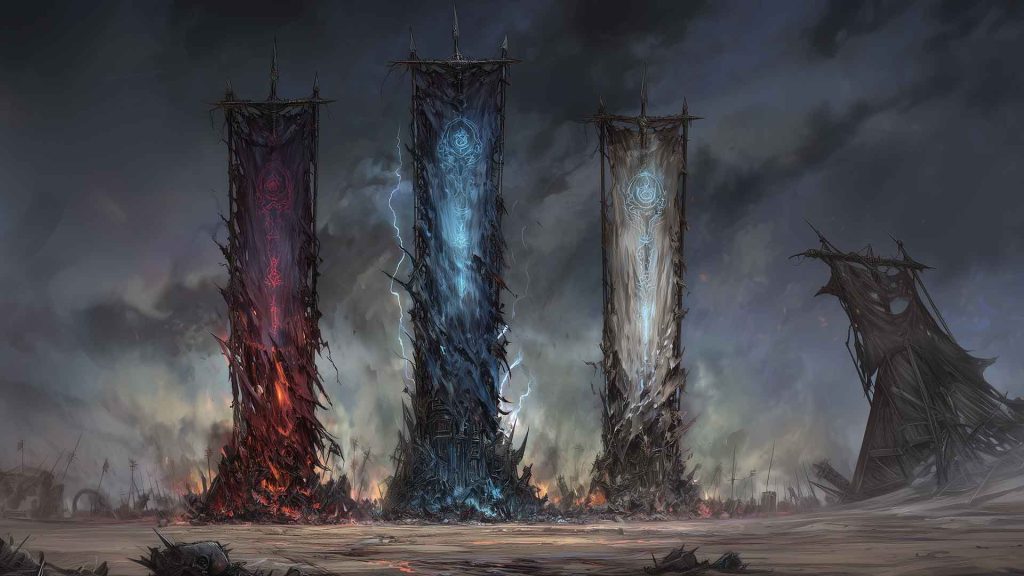
The three realms of existence give the world its vertical structure. The Material realm is where mortal characters live and most gameplay unfolds. The Demonic and Spiritual realms mirror it on either side, and players of certain classes could interact with, draw power from, or contest control of those adjacent planes. The Elemental planes added further depth, accessible through specific class abilities tied to elemental forces.
The world itself is built across thousands of rooms spanning deep oceans, arid deserts, haunted forests, and frozen wastes. Cities range from sprawling metropolitan centers to humble townships, and the dungeon and wilderness content between them gave players space for solo exploration alongside the PvP systems that defined the game’s competitive identity.
20 professions and more than 3,000 abilities
Imperian called its classes professions. There were 20 of them, each aligned with one of the three factional powers, with some occupying more neutral or crossover space. The range covered the expected archetypes: deathknights, rangers, assassins, templars, shamans. It also included more unusual options: diabolists, summoners, and necromancers with distinct mechanical identities rather than cosmetic variations on a single framework.
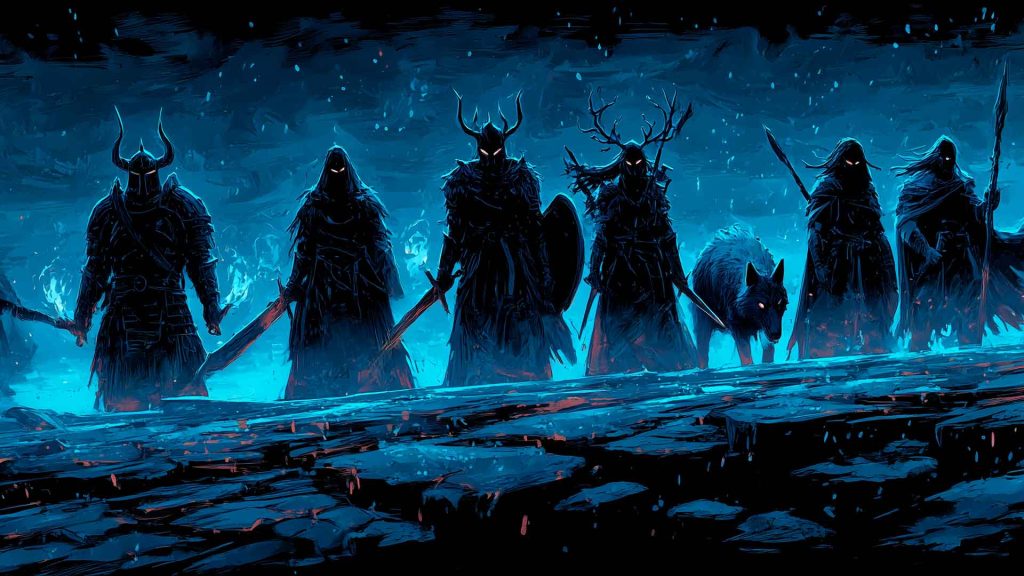
The skill system ran deep. Seventy or more skillsets existed across all classes, ranging from Necromancy and Curses to Shamanism and Shadowbinding, each with dozens of individual abilities. The total ability count across all characters exceeded 3,000. For PvP-focused players, that depth was the point. Learning a class in Imperian meant understanding a large ability set well enough to apply it reliably under pressure against opponents doing the same.
| Profession type | Examples | Faction alignment |
| Dark / Demonic | Deathknight, Diabolist, Summoner, Necromancer | Demonic |
| Holy / Spiritual | Templar, Druid, Paladin-type classes | Spiritual |
| Nature / Balanced | Ranger, Druid variants, Shaman | Mixed |
| Arcane / Shadow | Assassin, Shadowbinder classes | Varies by alignment |
PvP systems: what made Imperian’s combat distinct
Imperian was built around player conflict more explicitly than any other Iron Realms game. Multiple overlapping systems created ongoing reasons to fight, with territory control, resource competition, and ranked play all running simultaneously. The game rewarded players who invested seriously in combat skill, and its culture reflected that priority.
Territorial and objective-based conflict
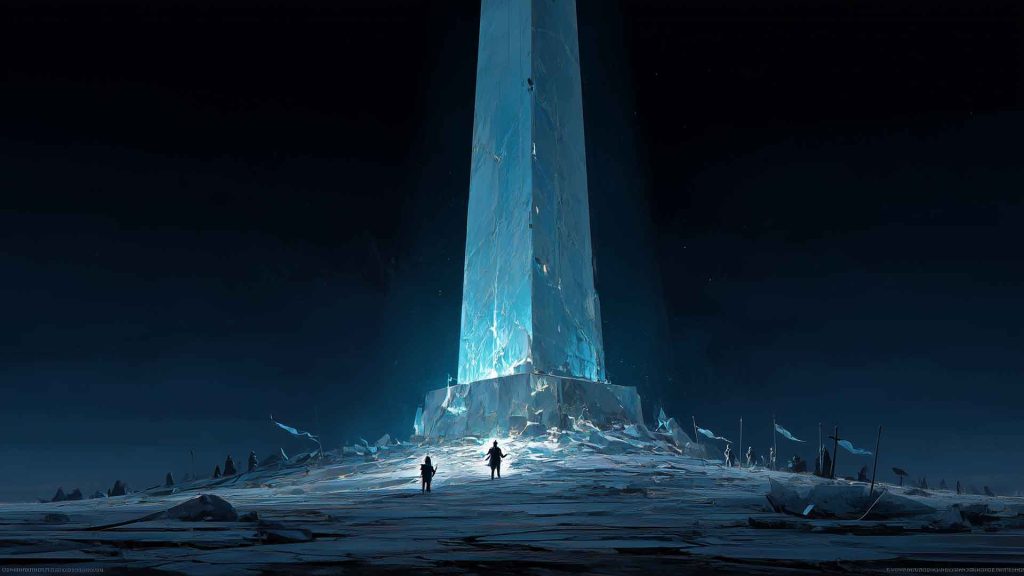
The City Raiding system gave groups objectives to capture inside enemy city territory. Obelisks of Power on distant islands created contested nodes that required organized group effort to hold. Shardfall Locations activated on a repeating timer every few hours, pulling active players into conflict over specific locations on the map. Leyline Intersections required sustained influence work to control, meaning factional competition did not only happen in bursts but required ongoing organizational effort.
Religious and political competition
Holy Shrines could be built or defiled in the name of specific entities. The religious dimension of the game was competitive: establishing or destroying shrines was a PvP action with territorial and ideological stakes. The Champion system ran parallel to all of this as a ranked individual PvP track, letting players compete for recognized standing outside the group-vs-group context.
Aspects and Monoliths
At the upper end of the power curve, Aspects and Monoliths represented the highest-tier rewards in the game, available only to characters who had demonstrated the sustained commitment and power to hold them. These were designed as markers of genuine achievement within Imperian’s meritocratic framing, not just progression milestones every player eventually reached.
Still accessible and free to play
Imperian remains free to access. Creating a character and entering the world costs nothing. The Nexus client runs in any modern browser with no download required, and the mobile Nexus app is available on Android and iOS for players who want to connect from a phone or tablet.
There is no active credit economy in the same sense as Achaea or Aetolia, since Imperian is no longer commercially developed. Players coming back to check on existing characters or explore the world as it exists can do so without friction.
Still playable: Imperian’s world is accessible at play.imperian.com at no cost.
Looking for an active Iron Realms game? See ironrealms.com/compare-games/
Moving to an actively developed Iron Realms game
For players who want the Iron Realms engine and style of gameplay in a world that is still growing, the two active commercial games are Achaea and Aetolia. Both run on the same underlying framework as Imperian with comparable depth in PvP, crafting, and political systems.
| Game | What it offers relative to Imperian |
| Achaea | High fantasy, city-state politics, 21 classes, active since 1997. The largest Iron Realms community and the longest continuous history. Deep PvP with skill-based combat. |
| Aetolia | Dark fantasy, light vs. dark faction conflict, 32 classes, vampires playable. Competitive PvP systems including the Sect of Blades and the Orrery. Active since the early 2000s. |
| Lusternia | Also in legacy mode. Shares Imperian’s maintenance status. A distinct setting if the existing world is what you want. |
Character retirement transfers from Imperian to an active game are available. The process preserves recognition of investment rather than requiring players to start entirely from scratch. For specifics, the Iron Realms game comparison page covers the differences across all five games, which can help inform where to bring an existing character.
Frequently asked questions
Is Imperian still playable?
Yes. Imperian is in legacy mode, meaning it no longer receives active updates, but the world remains fully accessible. Players can log in, explore, and engage with existing content at no cost.
What does Imperian’s legacy mode mean?
Legacy mode means Iron Realms has stopped commercial development on Imperian. Regular staff support and planned new content from the commercial team are no longer part of the game. However, volunteer contributors continue to make improvements. The existing game world stays fully operational and is no longer a commercially developed product.
Can I transfer my Imperian character to another game?
Yes. Iron Realms offered character retirement transfers when the legacy announcement was made, allowing Imperian players to move to Achaea, Aetolia, or Lusternia. Contact Iron Realms for details on the current transfer process.
How many classes does Imperian have?
Imperian has 20 classes, called professions. They include deathknights, rangers, assassins, templars, diabolists, summoners, necromancers, and more, each aligned with one of the three factional powers in the game’s cosmology.
What kind of game was Imperian known for?
Imperian was known primarily for its PvP emphasis. Multiple overlapping conflict systems, including City Raiding, Obelisks of Power, Shardfall Locations, and Leyline Intersections, created continuous reasons for factional combat. The game attracted players who valued hard-edged competitive play.
Is Imperian free to play?
Yes. Imperian is free to access. The Nexus client runs in any modern browser and the mobile Nexus app is available on Android and iOS.
What are the best alternatives to Imperian?
Achaea and Aetolia are the two actively developed Iron Realms games. Both offer comparable depth in PvP, crafting, and political systems within the same engine tradition as Imperian. See ironrealms.com/compare-games/ for a full breakdown..