
Lusternia: Age of Ascension
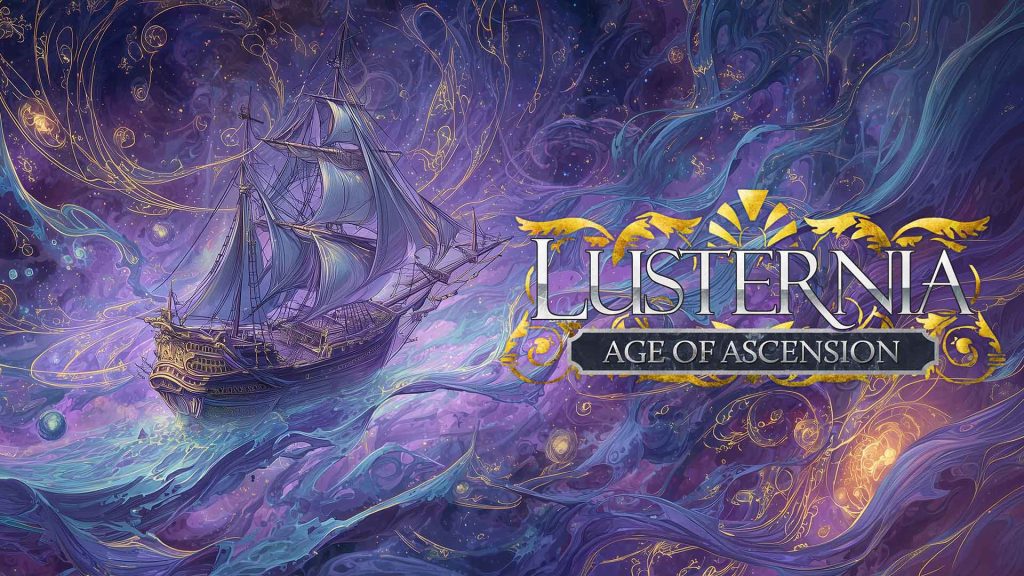
Lusternia is a rich fantasy world where an ancient cosmic conflict has corrupted much of the land, yet its inhabitants continue to fight to restore and protect it from the ever-lurking danger. As the world’s various nations vie for power and influence, they must contend with Elder Gods and Soulless Gods alike, and the secrets buried in the world’s ancient past. The few who rise to the challenge may become True Ascendants and ensure that Kethuru the Almighty’s prison remains eternal.
Legacy Mode Lusternia is in legacy mode: no longer commercially developed, but still receiving updates from a volunteer team. The game world is fully accessible and free to play.
>> Play Lusternia: https://play.lusternia.com
What is Lusternia?
Lusternia is a text-based multiplayer RPG in the MUD tradition. The world is rendered through descriptive prose, and players navigate and interact through text commands. Within the Iron Realms catalogue, Lusternia occupies a distinct position: it is the most roleplay-intensive of the five games, the one with the most elaborate lore architecture, and the one with the most literary-influenced culture. The fantasy world has its own cosmological history starting from the creation of the universe, and that history connects to every guild, city, and character race in the game.
The game is set in the Basin of Life, an original fantasy world where the fragments of Elder Gods became mortal races after a catastrophic cosmological event. Each character carries what is called a god-fragment, a piece of a divine being embedded in the mortal soul, and the lore path of Lusternia is the progression of that fragment toward eventual divinity through cycles of experience. That mythology runs through everything, from class choice to city politics to the Divine Orders players can join.
If you are new to text RPGs, the MUD games overview covers how the genre works. The Iron Realms game comparison page places Lusternia alongside the other four games if you want a direct side-by-side.
Six nations, two philosophies: the Basin of Life’s political map
Lusternia has six player-run organizations: four cities and two nature communes. Each one has its own history, culture, alignment, and set of allied guilds. Every guild in the game is affiliated with one of these six nations, meaning class choice and organizational affiliation are linked from the start.
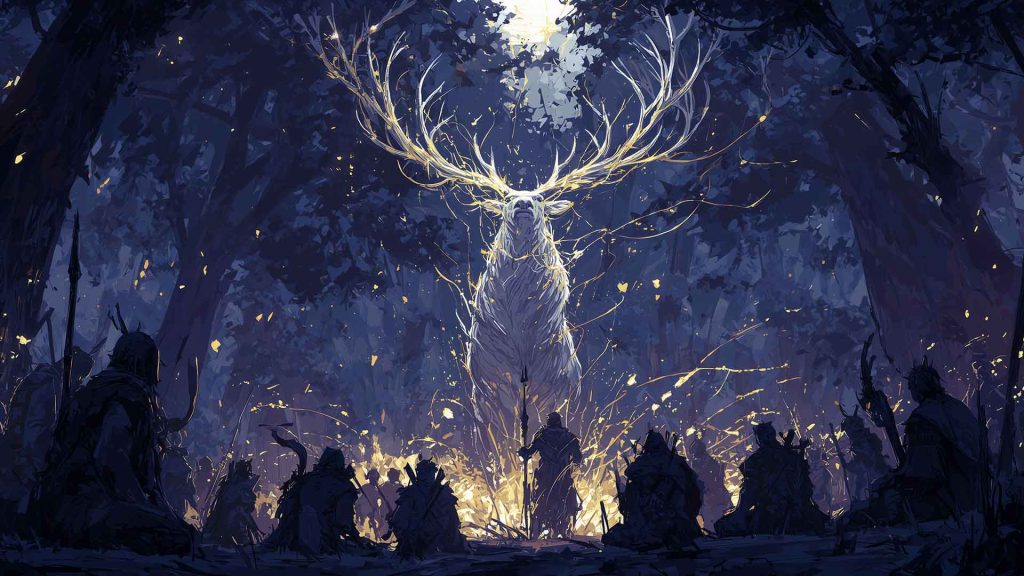
The broad split is between taint-aligned and order-aligned forces on the city side, and between light-nature and shadow-nature on the commune side. But the nuance within each nation is what produces the game’s actual political texture. Gaudiguch is fire-aligned and leans toward freedom and chaos. Hallifax is a city of temporal science and strict order. New Celest is holy and light-aligned. Magnagora is demonic and Taint-aligned. Serenwilde is a nature commune tied to the spirit of White Hart and the Moon. Glomdoring is a dark forest commune aligned with the Wyrd, crow-totems, and shadow.
| Nation | Type | Character |
| New Celest | City | Holy, light-aligned, angelic; home to Paladins, Celestines, Cantors, Aquamancers, Tahtetso |
| Magnagora | City | Taint, demonic, necromantic; home to Ur’Guard, Nihilists, Cacophony, Geomancers, Ninjakari |
| Gaudiguch | City | Fire, freedom, chaos; home to Templars, Illuminati, Minstrels, Pyromancers |
| Hallifax | City | Order, time, air; home to Sentinels, Institute, Symphonium, Aeromancers |
| Serenwilde | Commune | Light nature, moon, spirit; home to Serenguard, Hartstone, Spiritsingers, Shofangi, Moondancers |
| Glomdoring | Commune | Dark nature, wyrd, shadow; home to Ebonguard, Blacktalon, Harbingers, Nekotai, Shadowdancers |
Seven archetypes, 28 guild classes
Lusternia structures its classes differently from Achaea and Aetolia. Rather than a flat list of individually distinct classes, Lusternia uses archetypes, which are broad class families with shared primary skills. Each archetype then branches into multiple guilds, one per nation. The guild you join determines your specialization, your lore affiliation, and which secondary skills you access.
The seven archetypes are Bard, Druid, Guardian, Mage, Monk, Warrior, and Wiccan. Each has between two and six guild implementations across the nations, producing 28 playable guild classes in total. A Bard in Magnagora (the Cacophony) plays very differently from a Bard in Hallifax (the Symphonium) because their specializations and secondary skill options diverge.
Archetypes at a glance
| Archetype | Nations available | Primary skill |
| Bard | All 6 nations | Music (city/commune flavors: Necroscream, Starhymn, Shadowbeat, Minstrelry, Wildarrane, Loralaria) |
| Druid | Glomdoring, Serenwilde (communes only) | Nature — Druidry specialization, Totem secondary |
| Guardian | All 4 cities | Cosmic magic — plane-specific specializations (Celestialism, Nihilism, Transmology, Harmonics) |
| Mage | All 4 cities | Elemental magic — element-specific specializations (Aeromancy, Elementalism, Geomancy, Pyromancy) |
| Monk | 4 nations | Kata (shared base), then guild-specific weapon mastery |
| Warrior | All 6 nations | Knighthood — weapon specializations (Blademaster, Bonecrusher, Pureblade, Axelord) |
| Wiccan | Glomdoring, Serenwilde (communes only) | Nature — Wicca specialization, Fae-summoning at mastery |
A full breakdown of all guilds, their lore, and their skill structures is on the Lusternia site: lusternia.com/classes
Aetherspace: Lusternia’s unique dimension
Aetherspace is the dimension that separates the planes in Lusternia’s cosmology, and it is navigable by ship. Players can commission aetherspace vessels and travel through it to reach locations not accessible by land. This is not a minor feature: aetherspace exploration is one of the things that most clearly differentiates Lusternia from every other Iron Realms game and from most of the MUD genre.
Ships in aetherspace can encounter other vessels, creating opportunities for ship-to-ship combat. Organizations can stake out aetheric territories. The dimension also contains floating islands, special crafting locations, and plot-relevant areas that surface during major story events. For players who find the land-based game too familiar, aetherspace provides a unique activity loop with its own navigation, combat, and exploration mechanics.
Crafting, economy, and player-built culture
Lusternia has 13 tradeskills: Alchemy, Bookbinding, Brewmeister, Cooking, Enchantment, Herbs, Jewelry, Lorecraft, Poisons, Spellcraft, Tailoring, Tattoos, and Tinkering. That range is wider than most Iron Realms games. Characters can pursue multiple tradeskills, running combinations like a jeweler who also brews, or a tailor who also crafts enchanted items.
The economy is player-driven. Characters run shops in cities and communes, producing goods through tradeskill systems and selling them to other players. The 2026 restaurant update extended this further: shops can now convert to restaurants, creating dining venues within the game world that other players can patronize. Player-crafted goods use designs that are written entirely by the players themselves, so items are genuinely individual.
Lusternia also has a strong written culture. Players write books that go into in-game libraries, compose plays performed in in-game theatres, and create scholarly documents that become part of the world’s lore record. For players interested in the creative and literary side of text RPGs, Lusternia’s systems for this are more developed than what any other Iron Realms game currently offers.
Free to play, no download required
Lusternia is free to access. The Nexus client runs in any modern browser at play.lusternia.com, and the Iron Realms Nexus mobile app is available on Android and iOS. Players who want to connect through a dedicated MUD client can do so as well.
The credit system works in the same way as the other Iron Realms games. Because Lusternia is in legacy mode, the commercial credit economy is less active than in Achaea or Aetolia, but existing systems remain operational.
Still playable: Lusternia is accessible at play.lusternia.com at no cost. No download required.
Looking for actively developed Iron Realms games? See ironrealms.com/compare-games/
Legacy mode: what it means for Lusternia specifically
Lusternia has a small, but dedicated volunteer team still actively contributing content. In the first months of 2026 alone the game received a restaurant system for player-run shops, a custom beast submission system, design and cartel updates, commodity price revisions, and a referral system for bringing in new and returning players.
While this activity is not commercially funded, the people working on Lusternia are doing it because they care about the game world and community. There is no development roadmap or guarantee of continued output, but Lusternia is not frozen, and the community that has stayed with it has continued to shape the world in meaningful ways.
For players considering where to invest time: the existing world and content base is deep enough to occupy years of play without any new additions. Lusternia’s roleplay culture, lore history, and crafting systems are fully intact and functional.
Considering an actively developed Iron Realms game
For players who want the Iron Realms engine and style in a fantasy game with a full commercial development team, Achaea and Aetolia are the active options. Both share the genre’s underlying mechanics and carry comparable depth in PvP, crafting, and political systems, though each has a distinct setting and community culture.
The Iron Realms game comparison page covers all five games side by side.
| Game | What carries over from Lusternia |
| Achaea | High fantasy, player-run city politics, deep PvP, tradeskill economy. The most similar political structure to Lusternia’s city/commune model. Active since 1997. |
| Aetolia | Dark fantasy, faction-based conflict, 32 classes, vampires playable. Different tone from Lusternia but comparable crafting and roleplay systems. Active since the early 2000s. |
Frequently asked questions
Is Lusternia still playable?
Yes. Lusternia is fully accessible and free to play. The game is in legacy mode, meaning it is no longer commercially developed, but a volunteer team continues to contribute updates and new content.
What does legacy mode mean for Lusternia?
Lusternia no longer has a paid commercial development team. A volunteer contributor continues to ship updates. The existing game world, classes, and crafting systems are fully intact.
How is Lusternia different from other Iron Realms games?
Lusternia is the most roleplay-intensive of the five Iron Realms games and the only one with aetherspace ship exploration. It has a more elaborate lore structure than Achaea or Aetolia, with a cosmological history starting from the creation of the universe. Its class system uses archetypes with multiple guild implementations rather than a flat class list.
What is aetherspace in Lusternia?
Aetherspace is a navigable dimension between the planes in Lusternia’s cosmology. Players can commission ships, travel through it to reach otherwise inaccessible locations, engage in ship-to-ship combat, and explore floating islands and plot-relevant areas. It is unique to Lusternia among Iron Realms games.
How many classes does Lusternia have?
Lusternia’s class system has 7 fantasy archetypes (Bard, Druid, Guardian, Mage, Monk, Warrior, Wiccan) each implemented as multiple guild classes, one per affiliated nation. This produces 28 playable guild classes in total. Each guild has its own lore history and skill specialization. The full list is available at lusternia.com/classes.
Is Lusternia free to play?
Yes. Creating a character and playing Lusternia is free. The Nexus client runs in any modern browser at play.lusternia.com, and a mobile app is available on Android and iOS.
Can I transfer my Lusternia character to another game?
Character retirement transfers between Iron Realms games have been available historically. Contact Iron Realms directly to ask about the current state of transfer options.
What tradeskills does Lusternia have?
Lusternia has 13 tradeskills: Alchemy, Bookbinding, Brewmeister, Cooking, Enchantment, Herbs, Jewelry, Lorecraft, Poisons, Spellcraft, Tailoring, Tattoos, and Tinkering. Characters can pursue multiple tradeskills simultaneously.